Driving School Compliance Software: How Digital Controls Help Reduce Compliance Risk
- Pedal Blog
- 14 JAN 2026
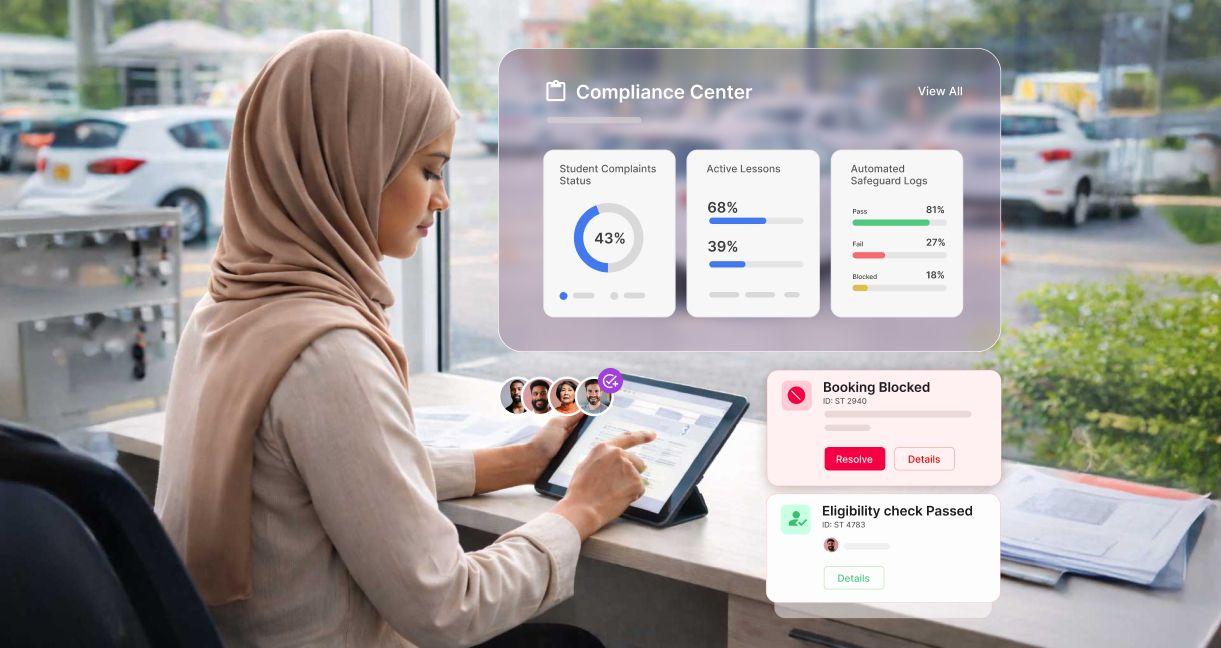
Driving centres manage many activities with compliance implications, including learner eligibility, training progression, instructor assignments, vehicle use, lesson scheduling, testing, and record-keeping. As learner volumes and branches increase, manually checking every condition becomes harder to manage consistently.
Driving school compliance software helps make compliance part of everyday operations rather than a separate task performed only before an audit. It can support structured checks, centralized records, configurable controls, exception visibility, and more consistent workflows. The goal is not to guarantee compliance. It is to help centres identify potential issues earlier, reduce dependence on memory-based checks, and maintain a clearer operational history.
What Is Driving School Compliance Software?
Driving school compliance software is a digital system that helps driving centres manage compliance-related requirements across daily operations. Depending on the platform and jurisdiction, this can include learner eligibility, training progression, instructor and vehicle assignments, lesson scheduling, testing activity, documentation, audit history, and reporting.
A basic record-keeping system mainly stores information. A compliance-aware system can also help validate required information before an action proceeds, identify incomplete steps, apply configured rules, surface exceptions, and preserve a traceable record.
Requirements vary between jurisdictions and regulators, so the system must reflect the centre's applicable rules, internal policies, and operating processes.
Why Compliance Becomes Harder as Driving Centres Scale
Compliance complexity grows because every additional learner, instructor, vehicle, lesson, and branch creates more decisions that may need validation.
A process that is manageable through manual checks at a small centre can become difficult when large volumes of activities occur across several teams. Staff may need to verify eligibility, progression, instructor suitability, vehicle status, documentation, and scheduling conditions repeatedly.
The problem is not that staff are careless. Manual processes depend heavily on people remembering every condition, checking multiple records, and applying rules consistently.
As operations expand, this can lead to missed checks, incomplete records, scheduling errors, inconsistent procedures, or delayed identification of exceptions. Digital controls can reduce that dependency by making relevant checks part of the workflow.
Where Compliance Risks Appear in Daily Operations
Compliance risk is not limited to audits. It can arise during routine decisions throughout the learner journey.
Learner Eligibility and Progression
Before certain lessons, tests, or training stages are scheduled, a centre may need to confirm that the learner meets applicable conditions and that required previous stages have been completed.
The specific requirements vary by jurisdiction. Operationally, the key principle is that eligibility should be checked before the activity proceeds rather than discovered later during a review.
Instructor and Vehicle Assignment
Instructor assignments may depend on authorization, qualification, training category, availability, or internal rules. Vehicle assignments may depend on category, status, availability, or another configured requirement.
A free instructor or vehicle is therefore not automatically suitable for every activity. Compliance-aware software can help surface mismatches or restrict certain assignments where supported.
Lesson and Test Scheduling
Scheduling becomes compliance-sensitive when a booking depends on learner status, completed prerequisites, instructor eligibility, vehicle availability, or configured operating conditions.
A time slot may be open on the calendar but still be unsuitable because one required condition has not been met.
Training and Testing Records
Compliance also depends on reliable operational records. Centres may need documentation showing what activity occurred, when it happened, who was involved, and the learner's progression or status.
Fragmented or incomplete records make historical review harder. Structured digital records improve traceability without implying that record-keeping alone creates compliance.
Why Reactive Compliance Creates Operational Risk
Reactive compliance means discovering a problem after an activity has taken place, investigating it, correcting it, and documenting the response.
This becomes inefficient when issues surface only during internal reviews or audits. Teams may spend significant time locating old records, comparing systems, and reconstructing what happened.
Proactive compliance takes a different approach. It attempts to identify incomplete conditions, unusual activity, or rule conflicts while the operational action is taking place.
Software can support this approach by helping staff identify problems earlier, but it does not remove the need for accurate data, correct configuration, or management oversight.
How Compliance Software Supports Proactive Control
A compliance-aware system can support operational checks before or during an activity.
For example, it may verify that required information is present before a booking is confirmed, identify a missing prerequisite, surface a record for review, request approval, or restrict an action based on configured requirements.
This reduces repetitive manual checking and can help teams apply the same conditions more consistently.
However, digital controls are only as reliable as the rules and data behind them. Incorrect data, outdated configuration, or misunderstood requirements can still create risk.
Compliance software strengthens the control environment. It does not replace governance.
Why Compliance-Aware Scheduling Matters
Traditional scheduling asks whether the learner, instructor, vehicle, and time slot are available.
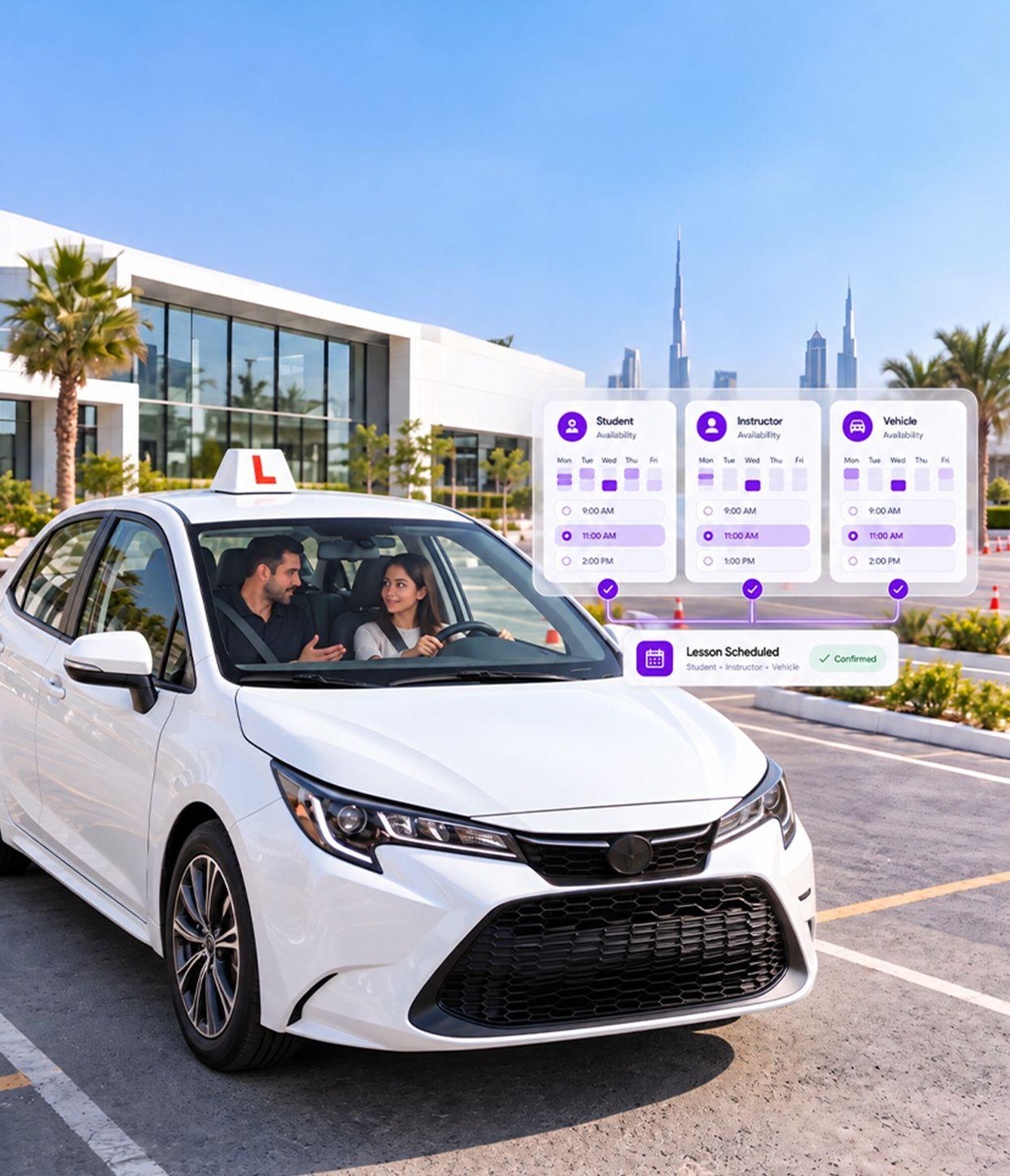
Compliance-aware scheduling may also need to ask whether the learner is eligible for the activity, whether relevant prerequisites are recorded, whether the instructor is appropriate, whether the required vehicle is suitable, and whether an exception requires review.
For example, an administrator may see an available instructor and open time slot, but the booking may still need to be blocked or reviewed if the learner has not completed a required previous stage under the centre's configured process.
This makes scheduling part of compliance management rather than simple calendar administration.
Why Centralized Records Improve Compliance Visibility
Fragmented information makes compliance harder because staff may need to compare spreadsheets, paper files, scheduling systems, instructor notes, and branch records.
Centralized records provide a more consistent view of learner activity, instructor assignments, lesson history, vehicle use, progression, tests, exceptions, and related documentation.
The main benefit is traceability. When relevant information is easier to retrieve, teams spend less time reconciling conflicting versions or reconstructing past activity.
Centralization does not automatically make a centre compliant. It improves the accessibility and consistency of the information used to manage compliance.
How Multi-Branch Centres Can Maintain Consistent Compliance
Multi-branch operations add complexity because locations may develop different administrative practices, record structures, or escalation methods.
A centralized compliance environment can support common workflows, shared operational rules, standardized records, and organization-wide visibility. Head office can review activity across branches while local teams continue managing day-to-day operations within the defined framework.
Software supports consistency, but management still needs to define rules, train staff, review exceptions, and keep requirements current.
From Compliance Monitoring to Exception Management
Compliance management should not require staff to manually review every normal activity.
Exception management focuses attention on records, bookings, or statuses that do not meet configured expectations or need additional review. Examples may include incomplete learner information, missing prerequisites, assignments that conflict with configured rules, inconsistent records, or activities requiring approval.
When normal activity follows the configured process, it can proceed through the standard workflow. When something falls outside those conditions, the system can surface it for review where supported.
This helps compliance and operations teams focus attention where it is most needed.
What Makes a Driving Centre Audit-Ready?
Audit readiness is created during normal operations, not when an inspection begins.
A centre is better prepared when records are captured consistently, historical activity can be traced, relevant documents are accessible, and information can be retrieved without extensive manual reconstruction.
Structured digital records can help teams understand what happened, when it happened, and which learner, instructor, vehicle, or activity was involved.
These capabilities support audit readiness. They do not guarantee a successful audit or prove that every underlying action was compliant.
What Compliance Software Cannot Guarantee
No software can guarantee complete regulatory compliance.
A system cannot ensure successful audits, eliminate every violation, interpret every regulation correctly, prevent incorrect data entry, or adapt to every regulatory change without review and configuration.
Effective compliance still depends on management oversight, accurate data, staff training, clear procedures, regulatory understanding, internal controls, and periodic review.
Compliance software strengthens the control environment, but it does not replace compliance governance.
What to Look for When Choosing Driving School Compliance Software
Driving centres should evaluate software according to the compliance problems it needs to solve.
Configurable Rules and Validation
Requirements and internal policies may change. A useful system should support relevant updates to rules, validations, and approval workflows where configuration is available.
Centralized Operational Records
Learner, instructor, vehicle, scheduling, training, and testing information should be connected where appropriate to reduce reconciliation between separate systems.
Role-Based Access
Different staff roles may need different access levels or permissions. Appropriate controls support clearer accountability and reduce unnecessary changes.
Exception Visibility and Traceability
Teams need a way to identify non-standard activity requiring review and understand relevant historical actions, statuses, or changes.
Multi-Branch Reporting and Governance
Larger organisations need consistent records, centralized reporting, and visibility across locations while still supporting branch-level operations.
Integration and Adaptability
Compliance information may need to connect with scheduling, learner management, testing, operational, or authority systems where applicable. Driving centres should verify actual integration capabilities rather than assume them.
How Pedal Mobility Supports Structured Compliance Management
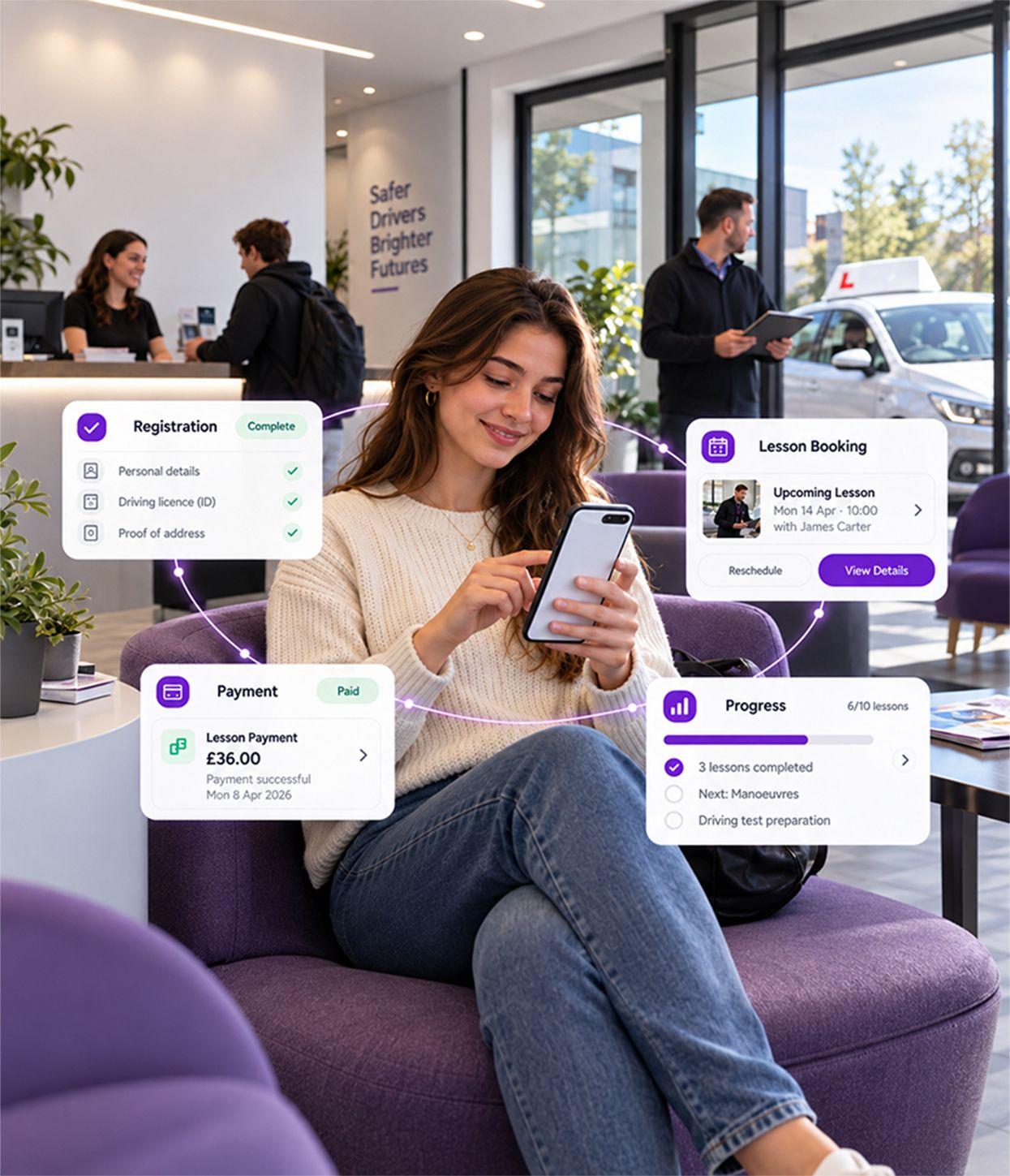
Pedal Mobility provides a centralized environment for driving-centre operations, helping teams manage learner information, scheduling, instructor allocation, vehicle activity, progress tracking, communication, and reporting in a connected system.
For compliance management, the value of centralization is greater visibility across activities that might otherwise be managed separately. Structured operational records can support review, while connected scheduling and learner information can help teams apply internal processes more consistently.
Pedal Mobility should not be presented as guaranteeing compliance or automatically interpreting regulations. Driving centres should confirm how their specific rules, approval processes, reporting needs, and integrations can be configured within the platform.
Practical Steps for Moving From Manual to Digital Compliance Management
Start by identifying where compliance-sensitive decisions occur, including learner progression, instructor and vehicle assignments, scheduling, tests, and records.
Document the conditions staff currently check, who approves exceptions, and where manual verification creates delays or inconsistent outcomes.
Centralize relevant information where possible, then configure workflow controls based on verified requirements and internal policies.
Define what happens when an activity falls outside normal conditions. Staff should know when an exception can be corrected, when approval is required, and when management or compliance teams must become involved.
Finally, train users and review the process regularly. Digital compliance management should support ongoing governance as requirements and operations change.
Conclusion
Driving school compliance software is most useful when compliance becomes part of normal operations rather than a separate exercise performed before an inspection.
By connecting records, validation controls, scheduling, exception visibility, and reporting, digital systems can help driving centres apply processes more consistently and identify potential issues earlier.
The objective is not to replace compliance teams or management judgement. It is to create a stronger operating environment in which requirements are easier to apply, activity is easier to trace, and exceptions receive attention sooner.
Pedal Mobility helps driving centres centralize operations and support more structured compliance management across training activities.
Request a demo to explore how Pedal Mobility can support your driving centre's compliance and operational requirements.
FAQs
Q: How Does Driving School Compliance Software Help Reduce Compliance Risk?
A: Compliance software can help reduce risk by embedding relevant checks into normal operational processes. It may help validate required information, identify missing prerequisites, surface exceptions, control certain actions based on configured conditions, and maintain structured records. Its effectiveness still depends on accurate data, correct configuration, staff processes, and management oversight.
Q: What Is Compliance-Aware Scheduling?
A: Compliance-aware scheduling considers more than whether a learner, instructor, vehicle, and time slot are available. It can also consider learner eligibility, completed prerequisites, instructor suitability, vehicle requirements, and outstanding exceptions. This helps identify scheduling conflicts related to configured compliance or operational rules before a booking is completed.
Q: How Do Centralized Records Support Driving School Audits?
A: Centralized records can make relevant historical information easier to retrieve and review. Instead of reconstructing activity from separate spreadsheets, paper files, and branch systems, teams can work from a more consistent operational history. This supports audit readiness and traceability, although it does not guarantee that an audit will be successful.
Q: What Is Proactive Compliance Management in a Driving Centre?
A: Proactive compliance management focuses on identifying incomplete conditions, exceptions, or potential rule conflicts while operational activity is taking place. Rather than discovering issues only during later reviews, digital controls can help staff address certain problems earlier. Proactive management reduces reliance on retrospective correction but does not eliminate compliance risk.
Q: Can Driving School Compliance Software Guarantee Regulatory Compliance?
A: No. Software cannot guarantee complete compliance, successful audits, accurate regulatory interpretation, or error-free operations. Effective compliance still requires management oversight, correct system configuration, accurate information, staff training, clear procedures, regulatory understanding, and regular review. Software supports the control environment rather than replacing compliance governance.
You might also be interested
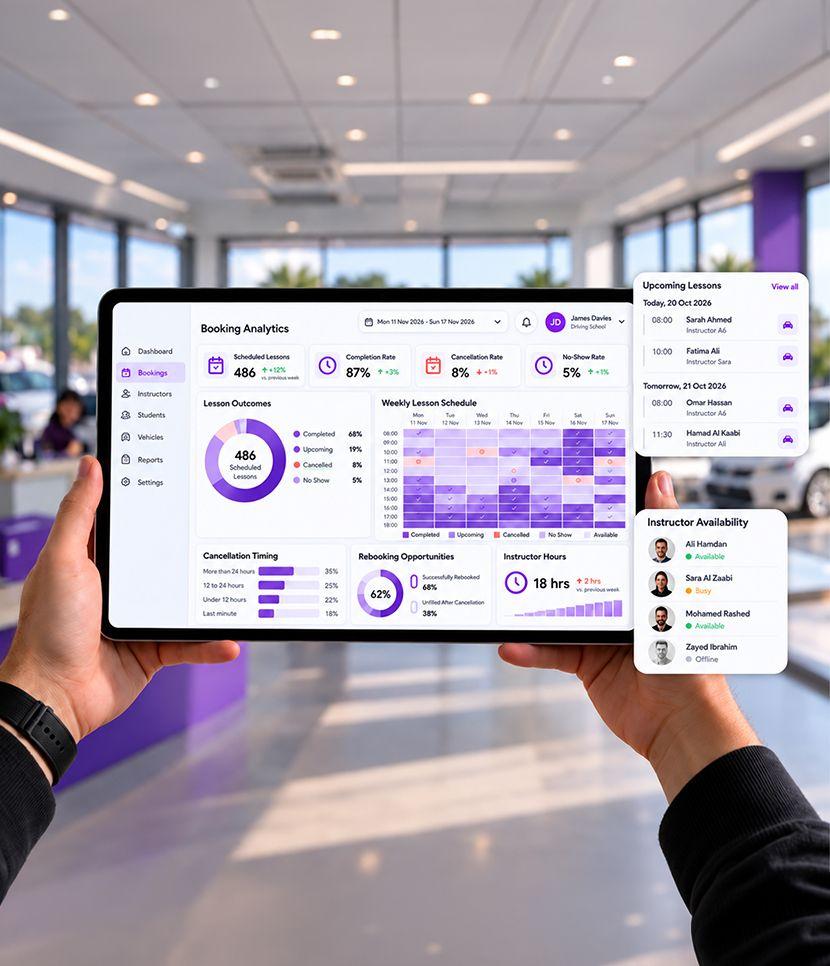

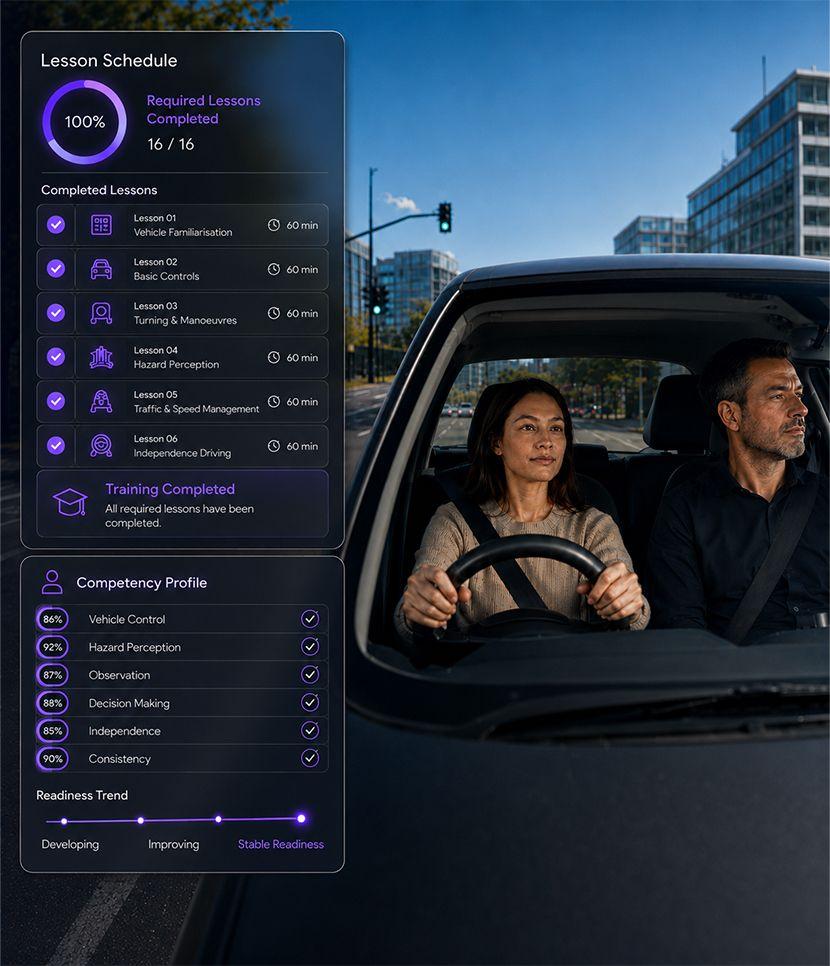
Transforming global driver training and licensing with AI-powered driver training software by connecting students, instructors, driving centres, and regulators in a seamless ecosystem.
Empowering all Stakeholders with Pedal Mobilitys Solutions.
Driving the Future With Results That Matter
Empowering students worldwide with innovative driver training software solutions tailored for modern learning.
Maximizing efficiency by smartly assigning vehicles and instructors, driven by our centralized driving school system.
Going fully digital with a paperless, user-friendly onboarding system powered by modern driving software.
Engaging students, instructors, and training admins every day through a connected, seamless, and intuitive driver training platform.
Introducing the New Era of AI in Personal Mobility
Pedal transforms driver education by integrating AI and automation into every step. Our centralized driving training software connects students, instructors, and regulators in a seamless, data-driven ecosystem built for modern mobility.
Insights and Stories shaping Driver Education
Maximizing efficiency by smartly assigning vehicles and instructors, driven by our centralized driving school system.
Going fully digital with a paperless, user-friendly onboarding system powered by modern driving software.
Engaging students, instructors, and training admins every day through a connected, seamless, and intuitive driver training platform.
Introducing the New Era of AI in Personal Mobility
Pedal transforms driver education by integrating AI and automation into every step. Our centralized driving training software connects students, instructors, and regulators in a seamless, data-driven ecosystem built for modern mobility.
Insights and Stories shaping Driver Education
Maximizing efficiency by smartly assigning vehicles and instructors, driven by our centralized driving school system.
Going fully digital with a paperless, user-friendly onboarding system powered by modern driving software.
Engaging students, instructors, and training admins every day through a connected, seamless, and intuitive driver training platform.
Introducing the New Era of AI in Personal Mobility
Pedal transforms driver education by integrating AI and automation into every step. Our centralized driving training software connects students, instructors, and regulators in a seamless, data-driven ecosystem built for modern mobility.
Insights and Stories shaping Driver Education
Maximizing efficiency by smartly assigning vehicles and instructors, driven by our centralized driving school system.
Going fully digital with a paperless, user-friendly onboarding system powered by modern driving software.
Engaging students, instructors, and training admins every day through a connected, seamless, and intuitive driver training platform.
Introducing the New Era of AI in Personal Mobility
Pedal transforms driver education by integrating AI and automation into every step. Our centralized driving training software connects students, instructors, and regulators in a seamless, data-driven ecosystem built for modern mobility.
Insights and Stories shaping Driver Education
Maximizing efficiency by smartly assigning vehicles and instructors, driven by our centralized driving school system.
Going fully digital with a paperless, user-friendly onboarding system powered by modern driving software.
Engaging students, instructors, and training admins every day through a connected, seamless, and intuitive driver training platform.
Introducing the New Era of AI in Personal Mobility
Pedal transforms driver education by integrating AI and automation into every step. Our centralized driving training software connects students, instructors, and regulators in a seamless, data-driven ecosystem built for modern mobility.
Insights and Stories shaping Driver Education
From instructor management to vehicle assignment, we are driving the future with results that matter.
Our platform connects students, instructors, and training admins every day through a connected, seamless, and intuitive driver training platform.
Introducing the New Era of AI in Personal Mobility
Transforming global driver training and licensing with AI-powered driver training software by connecting students, instructors, driving centres, and regulators in a seamless ecosystem.
Empowering all Stakeholders with Pedal Mobilitys Solutions.
Driving the Future With Results That Matter
Empowering students worldwide with innovative driver training software solutions tailored for modern learning.
Maximizing efficiency by smartly assigning vehicles and instructors, driven by our centralized driving school system.
Going fully digital with a paperless, user-friendly onboarding system powered by modern driving software.
Engaging students, instructors, and training admins every day through a connected, seamless, and intuitive driver training platform.
Introducing the New Era of AI in Personal Mobility
Pedal transforms driver education by integrating AI and automation into every step. Our centralized driving training software connects students, instructors, and regulators in a seamless, data-driven ecosystem built for modern mobility.
Insights and Stories shaping Driver Education
Maximizing efficiency by smartly assigning vehicles and instructors, driven by our centralized driving school system.
Going fully digital with a paperless, user-friendly onboarding system powered by modern driving software.
Engaging students, instructors, and training admins every day through a connected, seamless, and intuitive driver training platform.
Introducing the New Era of AI in Personal Mobility
Pedal transforms driver education by integrating AI and automation into every step. Our centralized driving training software connects students, instructors, and regulators in a seamless, data-driven ecosystem built for modern mobility.
Insights and Stories shaping Driver Education
Maximizing efficiency by smartly assigning vehicles and instructors, driven by our centralized driving school system.
Going fully digital with a paperless, user-friendly onboarding system powered by modern driving software.
Engaging students, instructors, and training admins every day through a connected, seamless, and intuitive driver training platform.
Introducing the New Era of AI in Personal Mobility
Pedal transforms driver education by integrating AI and automation into every step. Our centralized driving training software connects students, instructors, and regulators in a seamless, data-driven ecosystem built for modern mobility.
Insights and Stories shaping Driver Education
Maximizing efficiency by smartly assigning vehicles and instructors, driven by our centralized driving school system.
Going fully digital with a paperless, user-friendly onboarding system powered by modern driving software.
Engaging students, instructors, and training admins every day through a connected, seamless, and intuitive driver training platform.
Introducing the New Era of AI in Personal Mobility
Pedal transforms driver education by integrating AI and automation into every step. Our centralized driving training software connects students, instructors, and regulators in a seamless, data-driven ecosystem built for modern mobility.
Insights and Stories shaping Driver Education
Maximizing efficiency by smartly assigning vehicles and instructors, driven by our centralized driving school system.
Going fully digital with a paperless, user-friendly onboarding system powered by modern driving software.
Engaging students, instructors, and training admins every day through a connected, seamless, and intuitive driver training platform.
Introducing the New Era of AI in Personal Mobility
Pedal transforms driver education by integrating AI and automation into every step. Our centralized driving training software connects students, instructors, and regulators in a seamless, data-driven ecosystem built for modern mobility.
Insights and Stories shaping Driver Education
From instructor management to vehicle assignment, we are driving the future with results that matter.
Our platform connects students, instructors, and training admins every day through a connected, seamless, and intuitive driver training platform.
Introducing the New Era of AI in Personal Mobility Transforming global driver training and licensing with AI-powered driver training software by connecting students, instructors, driving centres, and regulators in a seamless ecosystem.
Empowering all Stakeholders with Pedal Mobilitys Solutions.
Driving the Future With Results That Matter
Empowering students worldwide with innovative driver training software solutions tailored for modern learning.
Maximizing efficiency by smartly assigning vehicles and instructors, driven by our centralized driving school system.
Going fully digital with a paperless, user-friendly onboarding system powered by modern driving software.
Engaging students, instructors, and training admins every day through a connected, seamless, and intuitive driver training platform.
Introducing the New Era of AI in Personal Mobility
Pedal transforms driver education by integrating AI and automation into every step. Our centralized driving training software connects students, instructors, and regulators in a seamless, data-driven ecosystem built for modern mobility.
Insights and Stories shaping Driver Education
Maximizing efficiency by smartly assigning vehicles and instructors, driven by our centralized driving school system.
Going fully digital with a paperless, user-friendly onboarding system powered by modern driving software.
Engaging students, instructors, and training admins every day through a connected, seamless, and intuitive driver training platform.
Introducing the New Era of AI in Personal Mobility
Pedal transforms driver education by integrating AI and automation into every step. Our centralized driving training software connects students, instructors, and regulators in a seamless, data-driven ecosystem built for modern mobility.
Insights and Stories shaping Driver Education
Maximizing efficiency by smartly assigning vehicles and instructors, driven by our centralized driving school system.
Going fully digital with a paperless, user-friendly onboarding system powered by modern driving software.
Engaging students, instructors, and training admins every day through a connected, seamless, and intuitive driver training platform.
Introducing the New Era of AI in Personal Mobility
Pedal transforms driver education by integrating AI and automation into every step. Our centralized driving training software connects students, instructors, and regulators in a seamless, data-driven ecosystem built for modern mobility.
Insights and Stories shaping Driver Education
Maximizing efficiency by smartly assigning vehicles and instructors, driven by our centralized driving school system.
Going fully digital with a paperless, user-friendly onboarding system powered by modern driving software.
Engaging students, instructors, and training admins every day through a connected, seamless, and intuitive driver training platform.
Introducing the New Era of AI in Personal Mobility
Pedal transforms driver education by integrating AI and automation into every step. Our centralized driving training software connects students, instructors, and regulators in a seamless, data-driven ecosystem built for modern mobility.
Insights and Stories shaping Driver Education
Maximizing efficiency by smartly assigning vehicles and instructors, driven by our centralized driving school system.
Going fully digital with a paperless, user-friendly onboarding system powered by modern driving software.
Engaging students, instructors, and training admins every day through a connected, seamless, and intuitive driver training platform.
Introducing the New Era of AI in Personal Mobility
Pedal transforms driver education by integrating AI and automation into every step. Our centralized driving training software connects students, instructors, and regulators in a seamless, data-driven ecosystem built for modern mobility.
Insights and Stories shaping Driver Education
From instructor management to vehicle assignment, we are driving the future with results that matter.
Our platform connects students, instructors, and training admins every day through a connected, seamless, and intuitive driver training platform.
Introducing the New Era of AI in Personal Mobility Transforming global driver training and licensing with AI-powered driver training software by connecting students, instructors, driving centres, and regulators in a seamless ecosystem.
Empowering all Stakeholders with Pedal Mobilitys Solutions.
Driving the Future With Results That Matter
Empowering students worldwide with innovative driver training software solutions tailored for modern learning.
Maximizing efficiency by smartly assigning vehicles and instructors, driven by our centralized driving school system.
Going fully digital with a paperless, user-friendly onboarding system powered by modern driving software.
Engaging students, instructors, and training admins every day through a connected, seamless, and intuitive driver training platform.
Introducing the New Era of AI in Personal Mobility
Pedal transforms driver education by integrating AI and automation into every step. Our centralized driving training software connects students, instructors, and regulators in a seamless, data-driven ecosystem built for modern mobility.
Insights and Stories shaping Driver Education
Maximizing efficiency by smartly assigning vehicles and instructors, driven by our centralized driving school system.
Going fully digital with a paperless, user-friendly onboarding system powered by modern driving software.
Engaging students, instructors, and training admins every day through a connected, seamless, and intuitive driver training platform.
Introducing the New Era of AI in Personal Mobility
Pedal transforms driver education by integrating AI and automation into every step. Our centralized driving training software connects students, instructors, and regulators in a seamless, data-driven ecosystem built for modern mobility.
Insights and Stories shaping Driver Education
Maximizing efficiency by smartly assigning vehicles and instructors, driven by our centralized driving school system.
Going fully digital with a paperless, user-friendly onboarding system powered by modern driving software.
Engaging students, instructors, and training admins every day through a connected, seamless, and intuitive driver training platform.
Introducing the New Era of AI in Personal Mobility
Pedal transforms driver education by integrating AI and automation into every step. Our centralized driving training software connects students, instructors, and regulators in a seamless, data-driven ecosystem built for modern mobility.
Insights and Stories shaping Driver Education
Maximizing efficiency by smartly assigning vehicles and instructors, driven by our centralized driving school system.
Going fully digital with a paperless, user-friendly onboarding system powered by modern driving software.
Engaging students, instructors, and training admins every day through a connected, seamless, and intuitive driver training platform.
Introducing the New Era of AI in Personal Mobility
Pedal transforms driver education by integrating AI and automation into every step. Our centralized driving training software connects students, instructors, and regulators in a seamless, data-driven ecosystem built for modern mobility.
Insights and Stories shaping Driver Education
Maximizing efficiency by smartly assigning vehicles and instructors, driven by our centralized driving school system.
Going fully digital with a paperless, user-friendly onboarding system powered by modern driving software.
Engaging students, instructors, and training admins every day through a connected, seamless, and intuitive driver training platform.
Introducing the New Era of AI in Personal Mobility
Pedal transforms driver education by integrating AI and automation into every step. Our centralized driving training software connects students, instructors, and regulators in a seamless, data-driven ecosystem built for modern mobility.
Insights and Stories shaping Driver Education
From instructor management to vehicle assignment, we are driving the future with results that matter.
Our platform connects students, instructors, and training admins every day through a connected, seamless, and intuitive driver training platform.
Introducing the New Era of AI in Personal Mobility Transforming global driver training and licensing with AI-powered driver training software by connecting students, instructors, driving centres, and regulators in a seamless ecosystem.
Empowering all Stakeholders with Pedal Mobilitys Solutions.
Driving the Future With Results That Matter
Empowering students worldwide with innovative driver training software solutions tailored for modern learning.
Maximizing efficiency by smartly assigning vehicles and instructors, driven by our centralized driving school system.
Going fully digital with a paperless, user-friendly onboarding system powered by modern driving software.
Engaging students, instructors, and training admins every day through a connected, seamless, and intuitive driver training platform.
Introducing the New Era of AI in Personal Mobility
Pedal transforms driver education by integrating AI and automation into every step. Our centralized driving training software connects students, instructors, and regulators in a seamless, data-driven ecosystem built for modern mobility.
Insights and Stories shaping Driver Education
Maximizing efficiency by smartly assigning vehicles and instructors, driven by our centralized driving school system.
Going fully digital with a paperless, user-friendly onboarding system powered by modern driving software.
Engaging students, instructors, and training admins every day through a connected, seamless, and intuitive driver training platform.
Introducing the New Era of AI in Personal Mobility
Pedal transforms driver education by integrating AI and automation into every step. Our centralized driving training software connects students, instructors, and regulators in a seamless, data-driven ecosystem built for modern mobility.
Insights and Stories shaping Driver Education
Maximizing efficiency by smartly assigning vehicles and instructors, driven by our centralized driving school system.
Going fully digital with a paperless, user-friendly onboarding system powered by modern driving software.
Engaging students, instructors, and training admins every day through a connected, seamless, and intuitive driver training platform.
Introducing the New Era of AI in Personal Mobility
Pedal transforms driver education by integrating AI and automation into every step. Our centralized driving training software connects students, instructors, and regulators in a seamless, data-driven ecosystem built for modern mobility.
Insights and Stories shaping Driver Education
Maximizing efficiency by smartly assigning vehicles and instructors, driven by our centralized driving school system.
Going fully digital with a paperless, user-friendly onboarding system powered by modern driving software.
Engaging students, instructors, and training admins every day through a connected, seamless, and intuitive driver training platform.
Introducing the New Era of AI in Personal Mobility
Pedal transforms driver education by integrating AI and automation into every step. Our centralized driving training software connects students, instructors, and regulators in a seamless, data-driven ecosystem built for modern mobility.
Insights and Stories shaping Driver Education
Maximizing efficiency by smartly assigning vehicles and instructors, driven by our centralized driving school system.
Going fully digital with a paperless, user-friendly onboarding system powered by modern driving software.
Engaging students, instructors, and training admins every day through a connected, seamless, and intuitive driver training platform.
Introducing the New Era of AI in Personal Mobility
Pedal transforms driver education by integrating AI and automation into every step. Our centralized driving training software connects students, instructors, and regulators in a seamless, data-driven ecosystem built for modern mobility.
Insights and Stories shaping Driver Education
From instructor management to vehicle assignment, we are driving the future with results that matter.
Our platform connects students, instructors, and training admins every day through a connected, seamless, and intuitive driver training platform.
Introducing the New Era of AI in Personal Mobility
Transforming global driver training and licensing with AI-powered driver training software by connecting students, instructors, driving centres, and regulators in a seamless ecosystem.
Empowering all Stakeholders with Pedal Mobilitys Solutions.
Driving the Future With Results That Matter
Empowering students worldwide with innovative driver training software solutions tailored for modern learning.
Maximizing efficiency by smartly assigning vehicles and instructors, driven by our centralized driving school system.
Going fully digital with a paperless, user-friendly onboarding system powered by modern driving software.
Engaging students, instructors, and training admins every day through a connected, seamless, and intuitive driver training platform.
Introducing the New Era of AI in Personal Mobility
Pedal transforms driver education by integrating AI and automation into every step. Our centralized driving training software connects students, instructors, and regulators in a seamless, data-driven ecosystem built for modern mobility.
Insights and Stories shaping Driver Education
Maximizing efficiency by smartly assigning vehicles and instructors, driven by our centralized driving school system.
Going fully digital with a paperless, user-friendly onboarding system powered by modern driving software.
Engaging students, instructors, and training admins every day through a connected, seamless, and intuitive driver training platform.
Introducing the New Era of AI in Personal Mobility
Pedal transforms driver education by integrating AI and automation into every step. Our centralized driving training software connects students, instructors, and regulators in a seamless, data-driven ecosystem built for modern mobility.
Insights and Stories shaping Driver Education
Maximizing efficiency by smartly assigning vehicles and instructors, driven by our centralized driving school system.
Going fully digital with a paperless, user-friendly onboarding system powered by modern driving software.
Engaging students, instructors, and training admins every day through a connected, seamless, and intuitive driver training platform.
Introducing the New Era of AI in Personal Mobility
Pedal transforms driver education by integrating AI and automation into every step. Our centralized driving training software connects students, instructors, and regulators in a seamless, data-driven ecosystem built for modern mobility.
Insights and Stories shaping Driver Education
Maximizing efficiency by smartly assigning vehicles and instructors, driven by our centralized driving school system.
Going fully digital with a paperless, user-friendly onboarding system powered by modern driving software.
Engaging students, instructors, and training admins every day through a connected, seamless, and intuitive driver training platform.
Introducing the New Era of AI in Personal Mobility
Pedal transforms driver education by integrating AI and automation into every step. Our centralized driving training software connects students, instructors, and regulators in a seamless, data-driven ecosystem built for modern mobility.
Insights and Stories shaping Driver Education
Maximizing efficiency by smartly assigning vehicles and instructors, driven by our centralized driving school system.
Going fully digital with a paperless, user-friendly onboarding system powered by modern driving software.
Engaging students, instructors, and training admins every day through a connected, seamless, and intuitive driver training platform.
Introducing the New Era of AI in Personal Mobility
Pedal transforms driver education by integrating AI and automation into every step. Our centralized driving training software connects students, instructors, and regulators in a seamless, data-driven ecosystem built for modern mobility.
Insights and Stories shaping Driver Education
From instructor management to vehicle assignment, we are driving the future with results that matter.
Our platform connects students, instructors, and training admins every day through a connected, seamless, and intuitive driver training platform.
Introducing the New Era of AI in Personal Mobility
Transforming global driver training and licensing with AI-powered driver training software by connecting students, instructors, driving centres, and regulators in a seamless ecosystem.
Empowering all Stakeholders with Pedal Mobilitys Solutions.
Driving the Future With Results That Matter
Empowering students worldwide with innovative driver training software solutions tailored for modern learning.
Maximizing efficiency by smartly assigning vehicles and instructors, driven by our centralized driving school system.
Going fully digital with a paperless, user-friendly onboarding system powered by modern driving software.
Engaging students, instructors, and training admins every day through a connected, seamless, and intuitive driver training platform.
Introducing the New Era of AI in Personal Mobility
Pedal transforms driver education by integrating AI and automation into every step. Our centralized driving training software connects students, instructors, and regulators in a seamless, data-driven ecosystem built for modern mobility.
Insights and Stories shaping Driver Education
Maximizing efficiency by smartly assigning vehicles and instructors, driven by our centralized driving school system.
Going fully digital with a paperless, user-friendly onboarding system powered by modern driving software.
Engaging students, instructors, and training admins every day through a connected, seamless, and intuitive driver training platform.
Introducing the New Era of AI in Personal Mobility
Pedal transforms driver education by integrating AI and automation into every step. Our centralized driving training software connects students, instructors, and regulators in a seamless, data-driven ecosystem built for modern mobility.
Insights and Stories shaping Driver Education
Maximizing efficiency by smartly assigning vehicles and instructors, driven by our centralized driving school system.
Going fully digital with a paperless, user-friendly onboarding system powered by modern driving software.
Engaging students, instructors, and training admins every day through a connected, seamless, and intuitive driver training platform.
Introducing the New Era of AI in Personal Mobility
Pedal transforms driver education by integrating AI and automation into every step. Our centralized driving training software connects students, instructors, and regulators in a seamless, data-driven ecosystem built for modern mobility.
Insights and Stories shaping Driver Education
Maximizing efficiency by smartly assigning vehicles and instructors, driven by our centralized driving school system.
Going fully digital with a paperless, user-friendly onboarding system powered by modern driving software.
Engaging students, instructors, and training admins every day through a connected, seamless, and intuitive driver training platform.
Introducing the New Era of AI in Personal Mobility
Pedal transforms driver education by integrating AI and automation into every step. Our centralized driving training software connects students, instructors, and regulators in a seamless, data-driven ecosystem built for modern mobility.
Insights and Stories shaping Driver Education
Maximizing efficiency by smartly assigning vehicles and instructors, driven by our centralized driving school system.
Going fully digital with a paperless, user-friendly onboarding system powered by modern driving software.
Engaging students, instructors, and training admins every day through a connected, seamless, and intuitive driver training platform.
Introducing the New Era of AI in Personal Mobility
Pedal transforms driver education by integrating AI and automation into every step. Our centralized driving training software connects students, instructors, and regulators in a seamless, data-driven ecosystem built for modern mobility.
Insights and Stories shaping Driver Education
From instructor management to vehicle assignment, we are driving the future with results that matter.
Our platform connects students, instructors, and training admins every day through a connected, seamless, and intuitive driver training platform.
Introducing the New Era of AI in Personal Mobility Transforming global driver training and licensing with AI-powered driver training software by connecting students, instructors, driving centres, and regulators in a seamless ecosystem.
Empowering all Stakeholders with Pedal Mobilitys Solutions.
Driving the Future With Results That Matter
Empowering students worldwide with innovative driver training software solutions tailored for modern learning.
Maximizing efficiency by smartly assigning vehicles and instructors, driven by our centralized driving school system.
Going fully digital with a paperless, user-friendly onboarding system powered by modern driving software.
Engaging students, instructors, and training admins every day through a connected, seamless, and intuitive driver training platform.
Introducing the New Era of AI in Personal Mobility
Pedal transforms driver education by integrating AI and automation into every step. Our centralized driving training software connects students, instructors, and regulators in a seamless, data-driven ecosystem built for modern mobility.
Insights and Stories shaping Driver Education
Maximizing efficiency by smartly assigning vehicles and instructors, driven by our centralized driving school system.
Going fully digital with a paperless, user-friendly onboarding system powered by modern driving software.
Engaging students, instructors, and training admins every day through a connected, seamless, and intuitive driver training platform.
Introducing the New Era of AI in Personal Mobility
Pedal transforms driver education by integrating AI and automation into every step. Our centralized driving training software connects students, instructors, and regulators in a seamless, data-driven ecosystem built for modern mobility.
Insights and Stories shaping Driver Education
Maximizing efficiency by smartly assigning vehicles and instructors, driven by our centralized driving school system.
Going fully digital with a paperless, user-friendly onboarding system powered by modern driving software.
Engaging students, instructors, and training admins every day through a connected, seamless, and intuitive driver training platform.
Introducing the New Era of AI in Personal Mobility
Pedal transforms driver education by integrating AI and automation into every step. Our centralized driving training software connects students, instructors, and regulators in a seamless, data-driven ecosystem built for modern mobility.
Insights and Stories shaping Driver Education
Maximizing efficiency by smartly assigning vehicles and instructors, driven by our centralized driving school system.
Going fully digital with a paperless, user-friendly onboarding system powered by modern driving software.
Engaging students, instructors, and training admins every day through a connected, seamless, and intuitive driver training platform.
Introducing the New Era of AI in Personal Mobility
Pedal transforms driver education by integrating AI and automation into every step. Our centralized driving training software connects students, instructors, and regulators in a seamless, data-driven ecosystem built for modern mobility.
Insights and Stories shaping Driver Education
Maximizing efficiency by smartly assigning vehicles and instructors, driven by our centralized driving school system.
Going fully digital with a paperless, user-friendly onboarding system powered by modern driving software.
Engaging students, instructors, and training admins every day through a connected, seamless, and intuitive driver training platform.
Introducing the New Era of AI in Personal Mobility
Pedal transforms driver education by integrating AI and automation into every step. Our centralized driving training software connects students, instructors, and regulators in a seamless, data-driven ecosystem built for modern mobility.
Insights and Stories shaping Driver Education
From instructor management to vehicle assignment, we are driving the future with results that matter.
Our platform connects students, instructors, and training admins every day through a connected, seamless, and intuitive driver training platform.
Introducing the New Era of AI in Personal Mobility Transforming global driver training and licensing with AI-powered driver training software by connecting students, instructors, driving centres, and regulators in a seamless ecosystem.
Empowering all Stakeholders with Pedal Mobilitys Solutions.
Driving the Future With Results That Matter
Empowering students worldwide with innovative driver training software solutions tailored for modern learning.
Maximizing efficiency by smartly assigning vehicles and instructors, driven by our centralized driving school system.
Going fully digital with a paperless, user-friendly onboarding system powered by modern driving software.
Engaging students, instructors, and training admins every day through a connected, seamless, and intuitive driver training platform.
Introducing the New Era of AI in Personal Mobility
Pedal transforms driver education by integrating AI and automation into every step. Our centralized driving training software connects students, instructors, and regulators in a seamless, data-driven ecosystem built for modern mobility.
Insights and Stories shaping Driver Education
Maximizing efficiency by smartly assigning vehicles and instructors, driven by our centralized driving school system.
Going fully digital with a paperless, user-friendly onboarding system powered by modern driving software.
Engaging students, instructors, and training admins every day through a connected, seamless, and intuitive driver training platform.
Introducing the New Era of AI in Personal Mobility
Pedal transforms driver education by integrating AI and automation into every step. Our centralized driving training software connects students, instructors, and regulators in a seamless, data-driven ecosystem built for modern mobility.
Insights and Stories shaping Driver Education
Maximizing efficiency by smartly assigning vehicles and instructors, driven by our centralized driving school system.
Going fully digital with a paperless, user-friendly onboarding system powered by modern driving software.
Engaging students, instructors, and training admins every day through a connected, seamless, and intuitive driver training platform.
Introducing the New Era of AI in Personal Mobility
Pedal transforms driver education by integrating AI and automation into every step. Our centralized driving training software connects students, instructors, and regulators in a seamless, data-driven ecosystem built for modern mobility.
Insights and Stories shaping Driver Education
Maximizing efficiency by smartly assigning vehicles and instructors, driven by our centralized driving school system.
Going fully digital with a paperless, user-friendly onboarding system powered by modern driving software.
Engaging students, instructors, and training admins every day through a connected, seamless, and intuitive driver training platform.
Introducing the New Era of AI in Personal Mobility
Pedal transforms driver education by integrating AI and automation into every step. Our centralized driving training software connects students, instructors, and regulators in a seamless, data-driven ecosystem built for modern mobility.
Insights and Stories shaping Driver Education
Maximizing efficiency by smartly assigning vehicles and instructors, driven by our centralized driving school system.
Going fully digital with a paperless, user-friendly onboarding system powered by modern driving software.
Engaging students, instructors, and training admins every day through a connected, seamless, and intuitive driver training platform.
Introducing the New Era of AI in Personal Mobility
Pedal transforms driver education by integrating AI and automation into every step. Our centralized driving training software connects students, instructors, and regulators in a seamless, data-driven ecosystem built for modern mobility.
Insights and Stories shaping Driver Education
From instructor management to vehicle assignment, we are driving the future with results that matter.
Our platform connects students, instructors, and training admins every day through a connected, seamless, and intuitive driver training platform.
Introducing the New Era of AI in Personal Mobility Transforming global driver training and licensing with AI-powered driver training software by connecting students, instructors, driving centres, and regulators in a seamless ecosystem.
Empowering all Stakeholders with Pedal Mobilitys Solutions.
Driving the Future With Results That Matter
Empowering students worldwide with innovative driver training software solutions tailored for modern learning.
Maximizing efficiency by smartly assigning vehicles and instructors, driven by our centralized driving school system.
Going fully digital with a paperless, user-friendly onboarding system powered by modern driving software.
Engaging students, instructors, and training admins every day through a connected, seamless, and intuitive driver training platform.
Introducing the New Era of AI in Personal Mobility
Pedal transforms driver education by integrating AI and automation into every step. Our centralized driving training software connects students, instructors, and regulators in a seamless, data-driven ecosystem built for modern mobility.
Insights and Stories shaping Driver Education
Maximizing efficiency by smartly assigning vehicles and instructors, driven by our centralized driving school system.
Going fully digital with a paperless, user-friendly onboarding system powered by modern driving software.
Engaging students, instructors, and training admins every day through a connected, seamless, and intuitive driver training platform.
Introducing the New Era of AI in Personal Mobility
Pedal transforms driver education by integrating AI and automation into every step. Our centralized driving training software connects students, instructors, and regulators in a seamless, data-driven ecosystem built for modern mobility.
Insights and Stories shaping Driver Education
Maximizing efficiency by smartly assigning vehicles and instructors, driven by our centralized driving school system.
Going fully digital with a paperless, user-friendly onboarding system powered by modern driving software.
Engaging students, instructors, and training admins every day through a connected, seamless, and intuitive driver training platform.
Introducing the New Era of AI in Personal Mobility
Pedal transforms driver education by integrating AI and automation into every step. Our centralized driving training software connects students, instructors, and regulators in a seamless, data-driven ecosystem built for modern mobility.
Insights and Stories shaping Driver Education
Maximizing efficiency by smartly assigning vehicles and instructors, driven by our centralized driving school system.
Going fully digital with a paperless, user-friendly onboarding system powered by modern driving software.
Engaging students, instructors, and training admins every day through a connected, seamless, and intuitive driver training platform.
Introducing the New Era of AI in Personal Mobility
Pedal transforms driver education by integrating AI and automation into every step. Our centralized driving training software connects students, instructors, and regulators in a seamless, data-driven ecosystem built for modern mobility.
Insights and Stories shaping Driver Education
Maximizing efficiency by smartly assigning vehicles and instructors, driven by our centralized driving school system.
Going fully digital with a paperless, user-friendly onboarding system powered by modern driving software.
Engaging students, instructors, and training admins every day through a connected, seamless, and intuitive driver training platform.
Introducing the New Era of AI in Personal Mobility
Pedal transforms driver education by integrating AI and automation into every step. Our centralized driving training software connects students, instructors, and regulators in a seamless, data-driven ecosystem built for modern mobility.
Insights and Stories shaping Driver Education
From instructor management to vehicle assignment, we are driving the future with results that matter.
Our platform connects students, instructors, and training admins every day through a connected, seamless, and intuitive driver training platform.
Introducing the New Era of AI in Personal Mobility
Transforming global driver training and licensing with AI-powered driver training software by connecting students, instructors, driving centres, and regulators in a seamless ecosystem.
Empowering all Stakeholders with Pedal Mobilitys Solutions.
Driving the Future With Results That Matter
Empowering students worldwide with innovative driver training software solutions tailored for modern learning.
Maximizing efficiency by smartly assigning vehicles and instructors, driven by our centralized driving school system.
Going fully digital with a paperless, user-friendly onboarding system powered by modern driving software.
Engaging students, instructors, and training admins every day through a connected, seamless, and intuitive driver training platform.
Introducing the New Era of AI in Personal Mobility
Pedal transforms driver education by integrating AI and automation into every step. Our centralized driving training software connects students, instructors, and regulators in a seamless, data-driven ecosystem built for modern mobility.
Insights and Stories shaping Driver Education
Maximizing efficiency by smartly assigning vehicles and instructors, driven by our centralized driving school system.
Going fully digital with a paperless, user-friendly onboarding system powered by modern driving software.
Engaging students, instructors, and training admins every day through a connected, seamless, and intuitive driver training platform.
Introducing the New Era of AI in Personal Mobility
Pedal transforms driver education by integrating AI and automation into every step. Our centralized driving training software connects students, instructors, and regulators in a seamless, data-driven ecosystem built for modern mobility.
Insights and Stories shaping Driver Education
Maximizing efficiency by smartly assigning vehicles and instructors, driven by our centralized driving school system.
Going fully digital with a paperless, user-friendly onboarding system powered by modern driving software.
Engaging students, instructors, and training admins every day through a connected, seamless, and intuitive driver training platform.
Introducing the New Era of AI in Personal Mobility
Pedal transforms driver education by integrating AI and automation into every step. Our centralized driving training software connects students, instructors, and regulators in a seamless, data-driven ecosystem built for modern mobility.
Insights and Stories shaping Driver Education
Maximizing efficiency by smartly assigning vehicles and instructors, driven by our centralized driving school system.
Going fully digital with a paperless, user-friendly onboarding system powered by modern driving software.
Engaging students, instructors, and training admins every day through a connected, seamless, and intuitive driver training platform.
Introducing the New Era of AI in Personal Mobility
Pedal transforms driver education by integrating AI and automation into every step. Our centralized driving training software connects students, instructors, and regulators in a seamless, data-driven ecosystem built for modern mobility.
Insights and Stories shaping Driver Education
Maximizing efficiency by smartly assigning vehicles and instructors, driven by our centralized driving school system.
Going fully digital with a paperless, user-friendly onboarding system powered by modern driving software.
Engaging students, instructors, and training admins every day through a connected, seamless, and intuitive driver training platform.
Introducing the New Era of AI in Personal Mobility
Pedal transforms driver education by integrating AI and automation into every step. Our centralized driving training software connects students, instructors, and regulators in a seamless, data-driven ecosystem built for modern mobility.
Insights and Stories shaping Driver Education
From instructor management to vehicle assignment, we are driving the future with results that matter.
Our platform connects students, instructors, and training admins every day through a connected, seamless, and intuitive driver training platform.
Introducing the New Era of AI in Personal Mobility
Transforming global driver training and licensing with AI-powered driver training software by connecting students, instructors, driving centres, and regulators in a seamless ecosystem.
Empowering all Stakeholders with Pedal Mobilitys Solutions.
Driving the Future With Results That Matter
Empowering students worldwide with innovative driver training software solutions tailored for modern learning.
Maximizing efficiency by smartly assigning vehicles and instructors, driven by our centralized driving school system.
Going fully digital with a paperless, user-friendly onboarding system powered by modern driving software.
Engaging students, instructors, and training admins every day through a connected, seamless, and intuitive driver training platform.
Introducing the New Era of AI in Personal Mobility
Pedal transforms driver education by integrating AI and automation into every step. Our centralized driving training software connects students, instructors, and regulators in a seamless, data-driven ecosystem built for modern mobility.
Insights and Stories shaping Driver Education
Maximizing efficiency by smartly assigning vehicles and instructors, driven by our centralized driving school system.
Going fully digital with a paperless, user-friendly onboarding system powered by modern driving software.
Engaging students, instructors, and training admins every day through a connected, seamless, and intuitive driver training platform.
Introducing the New Era of AI in Personal Mobility
Pedal transforms driver education by integrating AI and automation into every step. Our centralized driving training software connects students, instructors, and regulators in a seamless, data-driven ecosystem built for modern mobility.
Insights and Stories shaping Driver Education
Maximizing efficiency by smartly assigning vehicles and instructors, driven by our centralized driving school system.
Going fully digital with a paperless, user-friendly onboarding system powered by modern driving software.
Engaging students, instructors, and training admins every day through a connected, seamless, and intuitive driver training platform.
Introducing the New Era of AI in Personal Mobility
Pedal transforms driver education by integrating AI and automation into every step. Our centralized driving training software connects students, instructors, and regulators in a seamless, data-driven ecosystem built for modern mobility.
Insights and Stories shaping Driver Education
Maximizing efficiency by smartly assigning vehicles and instructors, driven by our centralized driving school system.
Going fully digital with a paperless, user-friendly onboarding system powered by modern driving software.
Engaging students, instructors, and training admins every day through a connected, seamless, and intuitive driver training platform.
Introducing the New Era of AI in Personal Mobility
Pedal transforms driver education by integrating AI and automation into every step. Our centralized driving training software connects students, instructors, and regulators in a seamless, data-driven ecosystem built for modern mobility.
Insights and Stories shaping Driver Education
Maximizing efficiency by smartly assigning vehicles and instructors, driven by our centralized driving school system.
Going fully digital with a paperless, user-friendly onboarding system powered by modern driving software.
Engaging students, instructors, and training admins every day through a connected, seamless, and intuitive driver training platform.
Introducing the New Era of AI in Personal Mobility
Pedal transforms driver education by integrating AI and automation into every step. Our centralized driving training software connects students, instructors, and regulators in a seamless, data-driven ecosystem built for modern mobility.
Insights and Stories shaping Driver Education
From instructor management to vehicle assignment, we are driving the future with results that matter.
Our platform connects students, instructors, and training admins every day through a connected, seamless, and intuitive driver training platform.
Introducing the New Era of AI in Personal Mobility Transforming global driver training and licensing with AI-powered driver training software by connecting students, instructors, driving centres, and regulators in a seamless ecosystem.
Empowering all Stakeholders with Pedal Mobilitys Solutions.
Driving the Future With Results That Matter
Empowering students worldwide with innovative driver training software solutions tailored for modern learning.
Maximizing efficiency by smartly assigning vehicles and instructors, driven by our centralized driving school system.
Going fully digital with a paperless, user-friendly onboarding system powered by modern driving software.
Engaging students, instructors, and training admins every day through a connected, seamless, and intuitive driver training platform.
Introducing the New Era of AI in Personal Mobility
Pedal transforms driver education by integrating AI and automation into every step. Our centralized driving training software connects students, instructors, and regulators in a seamless, data-driven ecosystem built for modern mobility.
Insights and Stories shaping Driver Education
Maximizing efficiency by smartly assigning vehicles and instructors, driven by our centralized driving school system.
Going fully digital with a paperless, user-friendly onboarding system powered by modern driving software.
Engaging students, instructors, and training admins every day through a connected, seamless, and intuitive driver training platform.
Introducing the New Era of AI in Personal Mobility
Pedal transforms driver education by integrating AI and automation into every step. Our centralized driving training software connects students, instructors, and regulators in a seamless, data-driven ecosystem built for modern mobility.
Insights and Stories shaping Driver Education
Maximizing efficiency by smartly assigning vehicles and instructors, driven by our centralized driving school system.
Going fully digital with a paperless, user-friendly onboarding system powered by modern driving software.
Engaging students, instructors, and training admins every day through a connected, seamless, and intuitive driver training platform.
Introducing the New Era of AI in Personal Mobility
Pedal transforms driver education by integrating AI and automation into every step. Our centralized driving training software connects students, instructors, and regulators in a seamless, data-driven ecosystem built for modern mobility.
Insights and Stories shaping Driver Education
Maximizing efficiency by smartly assigning vehicles and instructors, driven by our centralized driving school system.
Going fully digital with a paperless, user-friendly onboarding system powered by modern driving software.
Engaging students, instructors, and training admins every day through a connected, seamless, and intuitive driver training platform.
Introducing the New Era of AI in Personal Mobility
Pedal transforms driver education by integrating AI and automation into every step. Our centralized driving training software connects students, instructors, and regulators in a seamless, data-driven ecosystem built for modern mobility.
Insights and Stories shaping Driver Education
Maximizing efficiency by smartly assigning vehicles and instructors, driven by our centralized driving school system.
Going fully digital with a paperless, user-friendly onboarding system powered by modern driving software.
Engaging students, instructors, and training admins every day through a connected, seamless, and intuitive driver training platform.
Introducing the New Era of AI in Personal Mobility
Pedal transforms driver education by integrating AI and automation into every step. Our centralized driving training software connects students, instructors, and regulators in a seamless, data-driven ecosystem built for modern mobility.
Insights and Stories shaping Driver Education
From instructor management to vehicle assignment, we are driving the future with results that matter.
Our platform connects students, instructors, and training admins every day through a connected, seamless, and intuitive driver training platform.
Introducing the New Era of AI in Personal Mobility Transforming global driver training and licensing with AI-powered driver training software by connecting students, instructors, driving centres, and regulators in a seamless ecosystem.
Empowering all Stakeholders with Pedal Mobilitys Solutions.
Driving the Future With Results That Matter
Empowering students worldwide with innovative driver training software solutions tailored for modern learning.
Maximizing efficiency by smartly assigning vehicles and instructors, driven by our centralized driving school system.
Going fully digital with a paperless, user-friendly onboarding system powered by modern driving software.
Engaging students, instructors, and training admins every day through a connected, seamless, and intuitive driver training platform.
Introducing the New Era of AI in Personal Mobility
Pedal transforms driver education by integrating AI and automation into every step. Our centralized driving training software connects students, instructors, and regulators in a seamless, data-driven ecosystem built for modern mobility.
Insights and Stories shaping Driver Education
Maximizing efficiency by smartly assigning vehicles and instructors, driven by our centralized driving school system.
Going fully digital with a paperless, user-friendly onboarding system powered by modern driving software.
Engaging students, instructors, and training admins every day through a connected, seamless, and intuitive driver training platform.
Introducing the New Era of AI in Personal Mobility
Pedal transforms driver education by integrating AI and automation into every step. Our centralized driving training software connects students, instructors, and regulators in a seamless, data-driven ecosystem built for modern mobility.
Insights and Stories shaping Driver Education
Maximizing efficiency by smartly assigning vehicles and instructors, driven by our centralized driving school system.
Going fully digital with a paperless, user-friendly onboarding system powered by modern driving software.
Engaging students, instructors, and training admins every day through a connected, seamless, and intuitive driver training platform.
Introducing the New Era of AI in Personal Mobility
Pedal transforms driver education by integrating AI and automation into every step. Our centralized driving training software connects students, instructors, and regulators in a seamless, data-driven ecosystem built for modern mobility.
Insights and Stories shaping Driver Education
Maximizing efficiency by smartly assigning vehicles and instructors, driven by our centralized driving school system.
Going fully digital with a paperless, user-friendly onboarding system powered by modern driving software.
Engaging students, instructors, and training admins every day through a connected, seamless, and intuitive driver training platform.
Introducing the New Era of AI in Personal Mobility
Pedal transforms driver education by integrating AI and automation into every step. Our centralized driving training software connects students, instructors, and regulators in a seamless, data-driven ecosystem built for modern mobility.
Insights and Stories shaping Driver Education
Maximizing efficiency by smartly assigning vehicles and instructors, driven by our centralized driving school system.
Going fully digital with a paperless, user-friendly onboarding system powered by modern driving software.
Engaging students, instructors, and training admins every day through a connected, seamless, and intuitive driver training platform.
Introducing the New Era of AI in Personal Mobility
Pedal transforms driver education by integrating AI and automation into every step. Our centralized driving training software connects students, instructors, and regulators in a seamless, data-driven ecosystem built for modern mobility.
Insights and Stories shaping Driver Education
From instructor management to vehicle assignment, we are driving the future with results that matter.
Our platform connects students, instructors, and training admins every day through a connected, seamless, and intuitive driver training platform.
Introducing the New Era of AI in Personal Mobility Transforming global driver training and licensing with AI-powered driver training software by connecting students, instructors, driving centres, and regulators in a seamless ecosystem.
Empowering all Stakeholders with Pedal Mobilitys Solutions.
Driving the Future With Results That Matter
Empowering students worldwide with innovative driver training software solutions tailored for modern learning.
Maximizing efficiency by smartly assigning vehicles and instructors, driven by our centralized driving school system.
Going fully digital with a paperless, user-friendly onboarding system powered by modern driving software.
Engaging students, instructors, and training admins every day through a connected, seamless, and intuitive driver training platform.
Introducing the New Era of AI in Personal Mobility
Pedal transforms driver education by integrating AI and automation into every step. Our centralized driving training software connects students, instructors, and regulators in a seamless, data-driven ecosystem built for modern mobility.
Insights and Stories shaping Driver Education
Maximizing efficiency by smartly assigning vehicles and instructors, driven by our centralized driving school system.
Going fully digital with a paperless, user-friendly onboarding system powered by modern driving software.
Engaging students, instructors, and training admins every day through a connected, seamless, and intuitive driver training platform.
Introducing the New Era of AI in Personal Mobility
Pedal transforms driver education by integrating AI and automation into every step. Our centralized driving training software connects students, instructors, and regulators in a seamless, data-driven ecosystem built for modern mobility.
Insights and Stories shaping Driver Education
Maximizing efficiency by smartly assigning vehicles and instructors, driven by our centralized driving school system.
Going fully digital with a paperless, user-friendly onboarding system powered by modern driving software.
Engaging students, instructors, and training admins every day through a connected, seamless, and intuitive driver training platform.
Introducing the New Era of AI in Personal Mobility
Pedal transforms driver education by integrating AI and automation into every step. Our centralized driving training software connects students, instructors, and regulators in a seamless, data-driven ecosystem built for modern mobility.
Insights and Stories shaping Driver Education
Maximizing efficiency by smartly assigning vehicles and instructors, driven by our centralized driving school system.
Going fully digital with a paperless, user-friendly onboarding system powered by modern driving software.
Engaging students, instructors, and training admins every day through a connected, seamless, and intuitive driver training platform.
Introducing the New Era of AI in Personal Mobility
Pedal transforms driver education by integrating AI and automation into every step. Our centralized driving training software connects students, instructors, and regulators in a seamless, data-driven ecosystem built for modern mobility.
Insights and Stories shaping Driver Education
Maximizing efficiency by smartly assigning vehicles and instructors, driven by our centralized driving school system.
Going fully digital with a paperless, user-friendly onboarding system powered by modern driving software.
Engaging students, instructors, and training admins every day through a connected, seamless, and intuitive driver training platform.
Introducing the New Era of AI in Personal Mobility
Pedal transforms driver education by integrating AI and automation into every step. Our centralized driving training software connects students, instructors, and regulators in a seamless, data-driven ecosystem built for modern mobility.
Insights and Stories shaping Driver Education
From instructor management to vehicle assignment, we are driving the future with results that matter.
Our platform connects students, instructors, and training admins every day through a connected, seamless, and intuitive driver training platform.
Introducing the New Era of AI in Personal Mobility